Three layers. One governed environment.
Orchen is a complete learning environment, three deliberate layers working as one. Here is the whole system in one pass, from a single student question to the insight it leaves behind.
One student question, end to end: the tutor teaches, the pipeline distills, the adults act, and the raw chat is gone in seven days.
A tutor that teaches, configured by your school.
Students experience Orchen as a conversation. The Socratic posture is hard-coded into the architecture, don’t take our word for it, watch it work.
The Socratic loop, live: question, attempt, build, real teaching in motion.
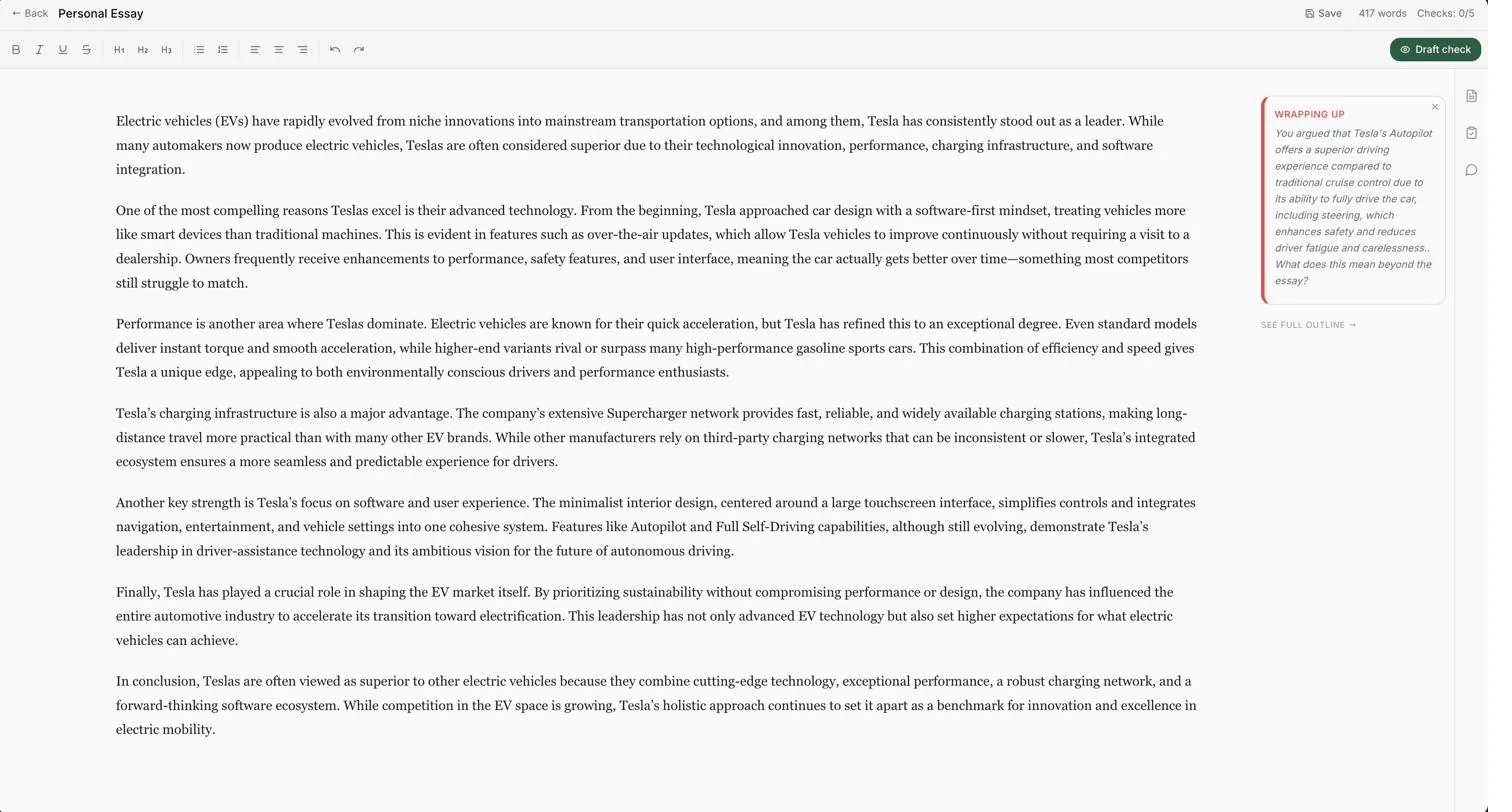
Writing opens a full workspace, the student writes, Orchen frames and checks.
Every session feeds a learning profile, how this student actually learns.
Encoded behavior, not marketing language
The Circle Rule switches approach after two wrong answers on the same concept. Partial examples stop before the final step so the student finishes. When the student has it, Orchen recognizes it and stops. Each rule is operational, documented on the platform page.
Your identity, your defaults
The tutor's identity, tone, mechanical-feedback policy, and crisis routing are set at the school level. Every student meets the same configured tutor in every class, consistency is the point.
Every conversation becomes structured signal.
A nightly pipeline turns sessions into concept-progress tracking, learning profiles, and plain-English narratives for the adults. Every adult sees polished synthesis, and raw conversations stay sealed, erased within seven days.
One class at a glance: who’s on track, who’s quietly stuck, who needs you today.
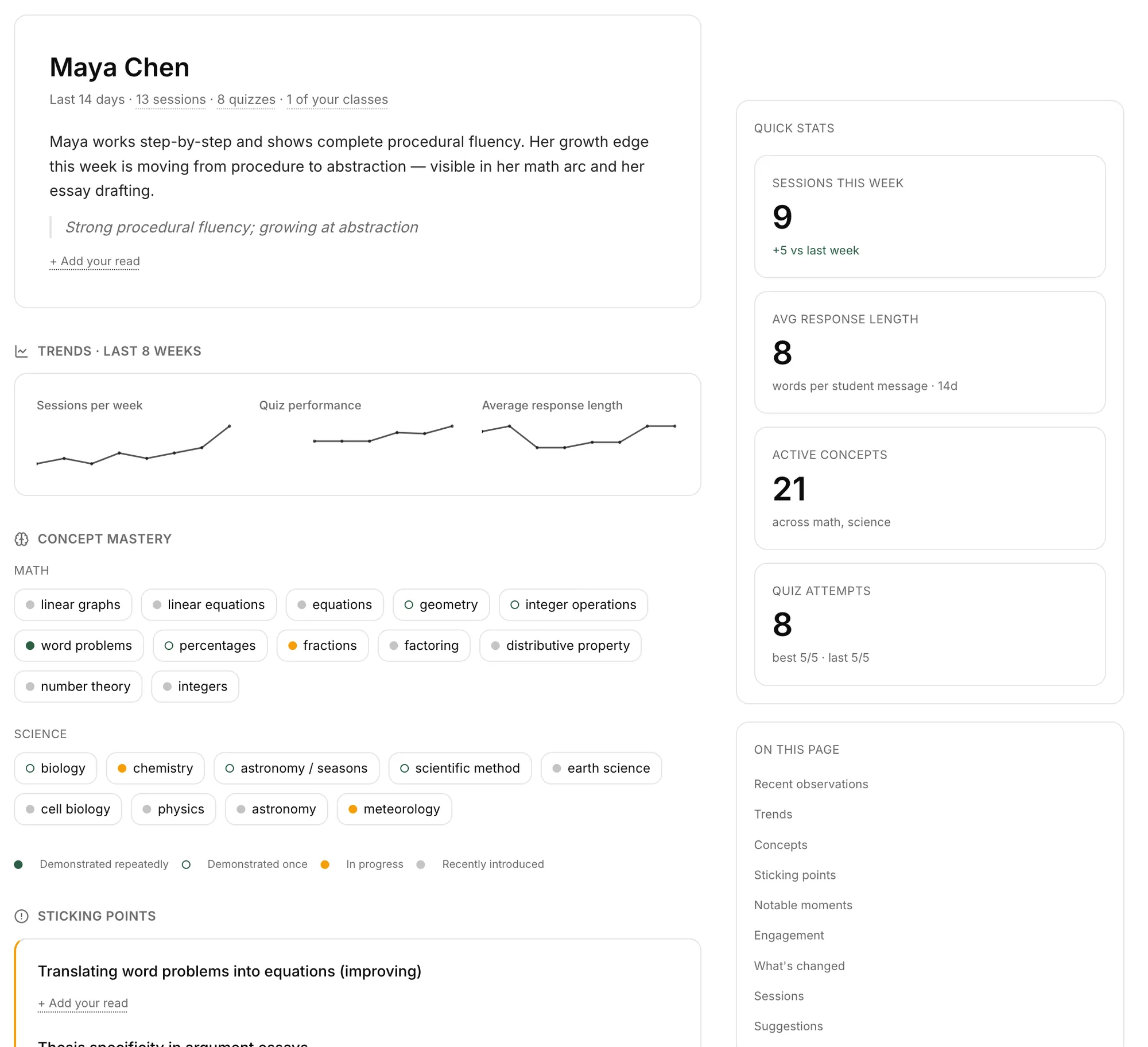
A teacher’s read on one student, built from sessions, not surveys.
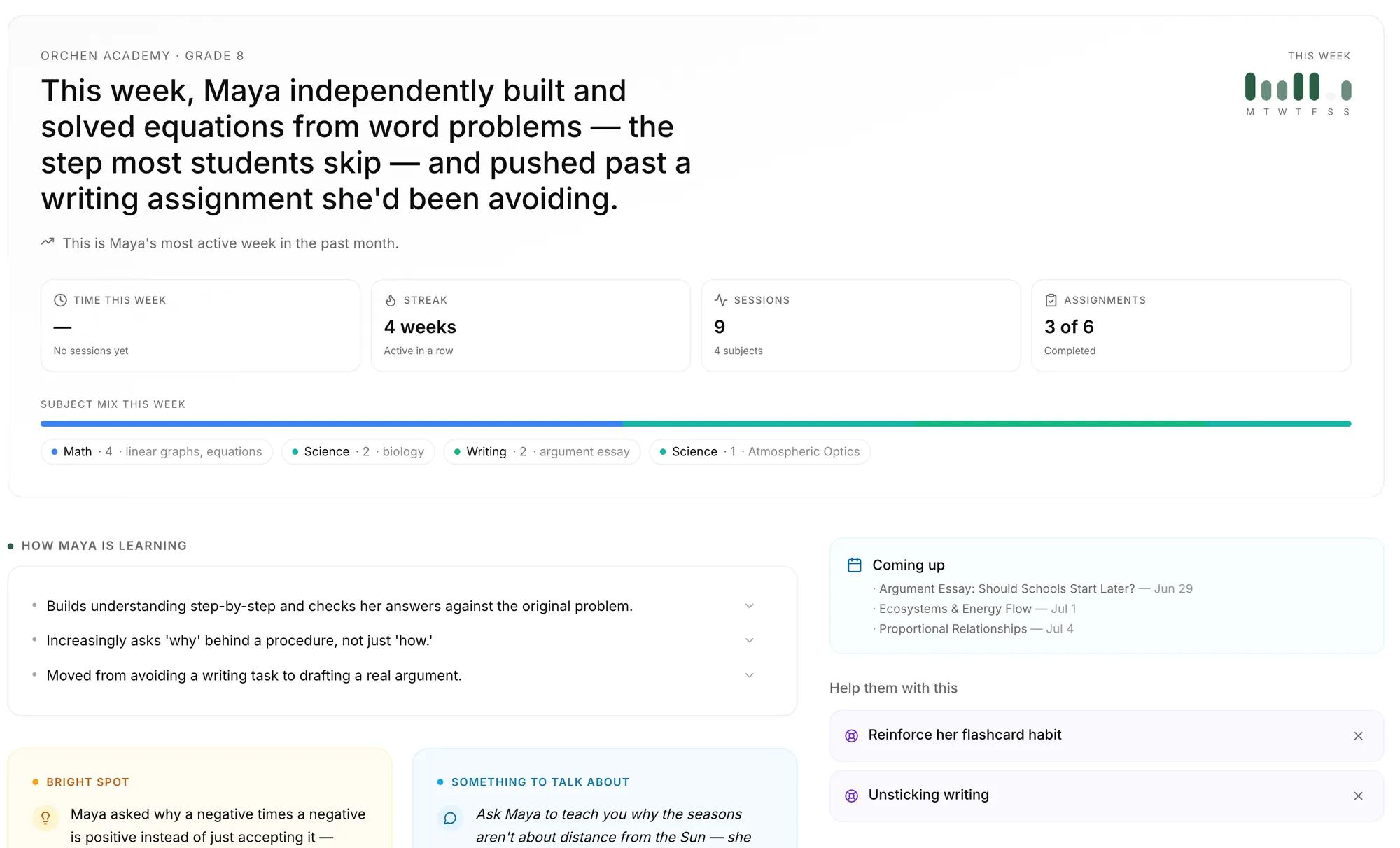
The parent view: a clear weekly picture, ending with one thing to do tonight.
Concerning content reaches a counselor, not an inbox
Every conversation is scanned. Detected concerns are flagged with a 24-hour urgency indicator, routed to the school's designated counselor, and tracked through a full lifecycle, open, reviewing, resolved, or escalated. Every step is logged.
Insight without surveillance
Students keep a private workspace, goals, journal, preferences, that no staff member can access. Staff see derived synthesis, scoped to their role, with every access written to an immutable audit log. The full model is in the Trust Center.
For schools that want enforcement, not just policy.
Orchen runs in the browser on whatever fleet your school already has, no IT project required. For schools that want network-level enforcement, an optional managed device layer is available.
Browser, on your existing fleet
Orchen runs in the browser on the devices you already manage. Most pilots start here, nothing to provision, nothing to image.
Managed device layer
Devices provisioned with MDM management and DNS filtering that point to Orchen as the school's AI environment of record.
It exists for schools where a written AI policy has already failed and the board wants the next answer to hold.
The data lifecycle, end to end.
A conversation is created, analyzed nightly into derived insight, and deleted at the source within seven days, leaving profiles and narratives governed by your school's retention policy, with crisis flags preserved and every staff access logged.
A student opens a chat. The conversation is scoped to the student and visible only to them.
The pipeline derives Learning Profiles, concept progress, and weekly narratives. Crisis flags route to the designated counselor.
The source conversation is deleted. Only the derived synthesis remains, privacy enforced by architecture, not policy.
Profiles and narratives persist under your school's retention policy. Crisis flags are preserved; every staff access is logged.
Thirty minutes against the real product.
Every screen on this page is from the live platform. A walkthrough shows you the rest, with your questions driving it.
Book a walkthrough →Or go deeper: the full platform architecture.