Complete the task.
- Answer first
- Optimize for speed
- Leave school invisible
A guided learning workspace for independent schools, AI that asks instead of answers, building a growing profile of every student for teachers, advisors, and parents.
Why now? Read the research →Orchen is a school-governed learning environment where students actually do their learning, guided sessions, a Writing Studio, flashcards and quizzes built from their own work. Because the learning happens there, a growing picture of how each student thinks forms underneath it.
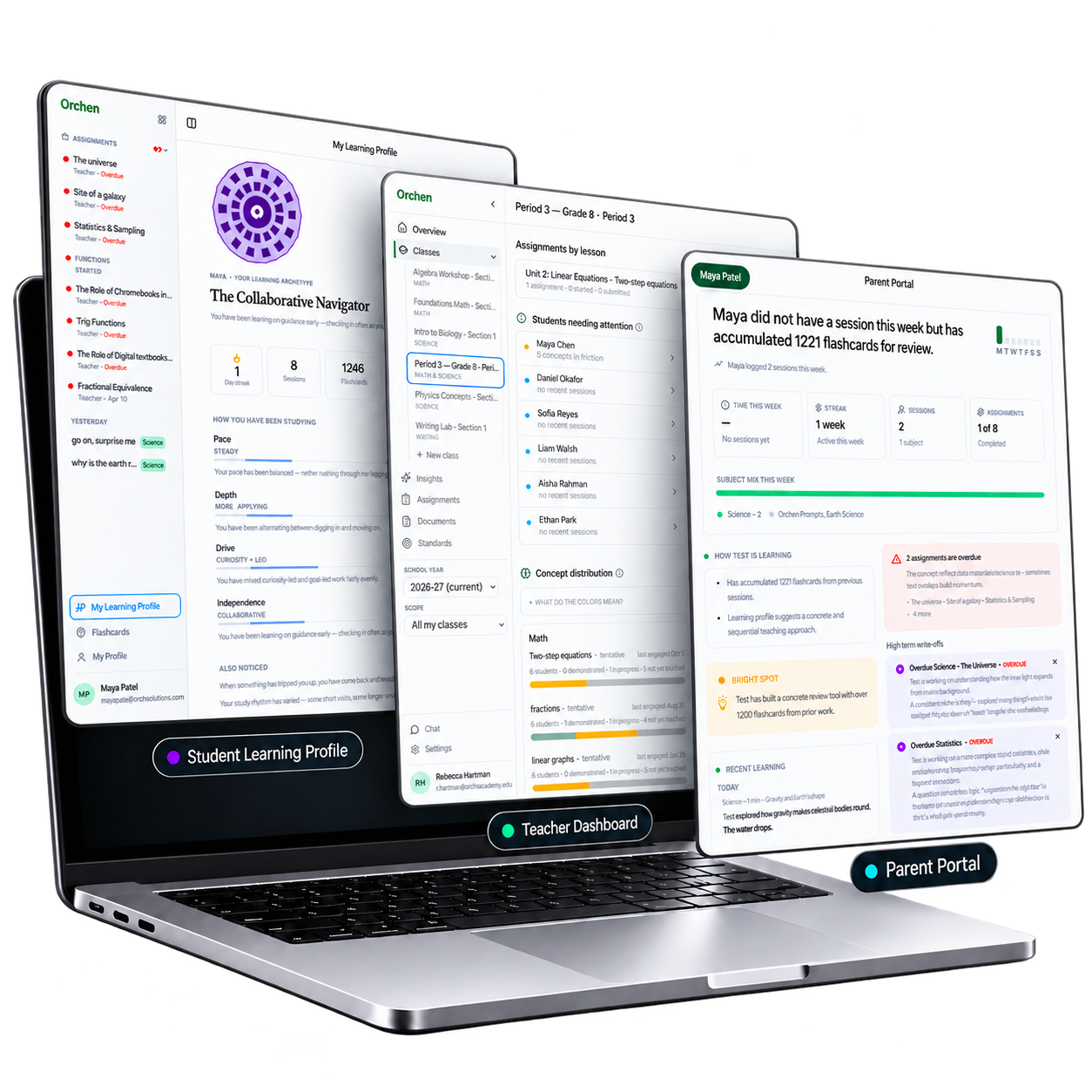
Teachers, advisors, and parents each see that same picture through their own window, at levels the school controls. And it compounds: what a teacher learns about a student in October no longer walks out the door in June. Institutional memory for how each student learns, teachers move on; the picture stays.
See the full platform architecture →
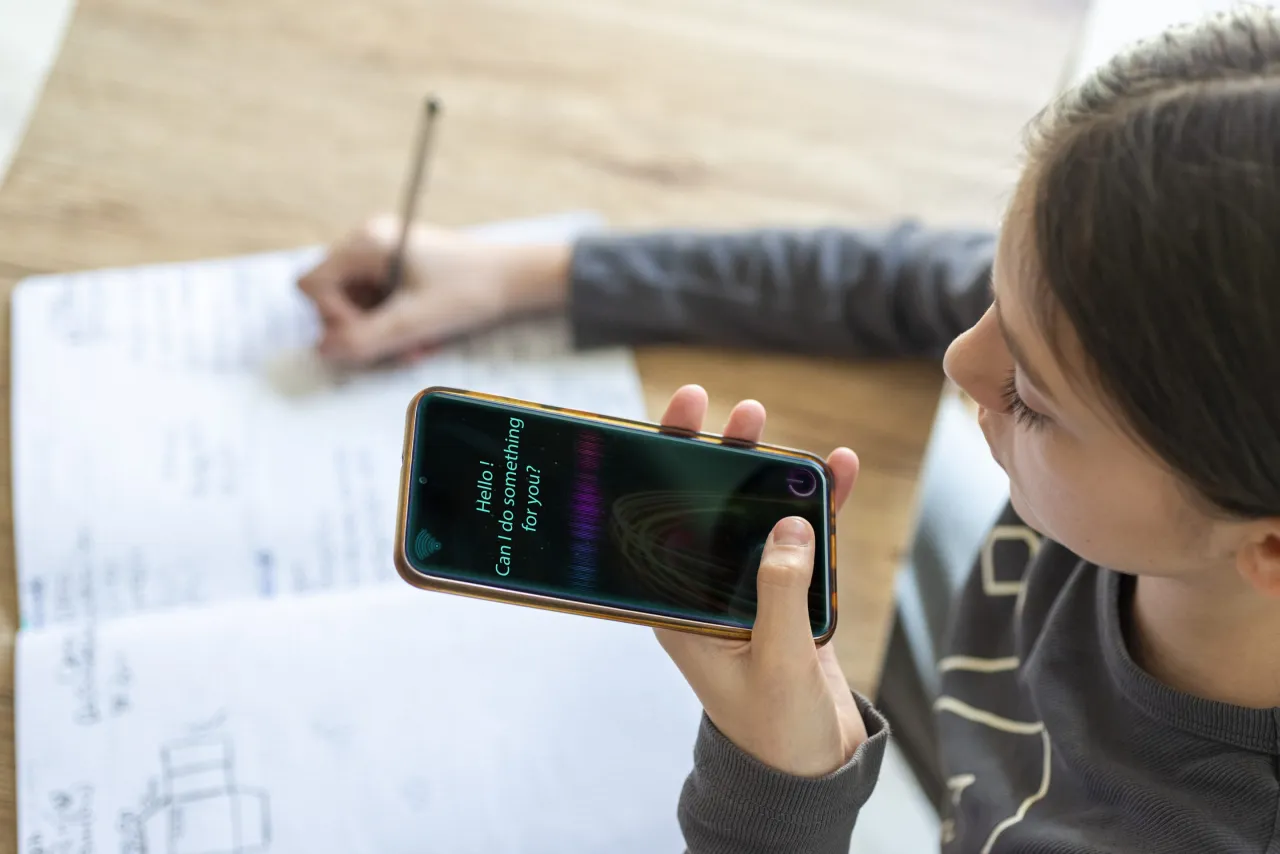
Students are already using AI. Orchen gives schools a version built to slow them down, keep them thinking, and show adults what support is needed next.
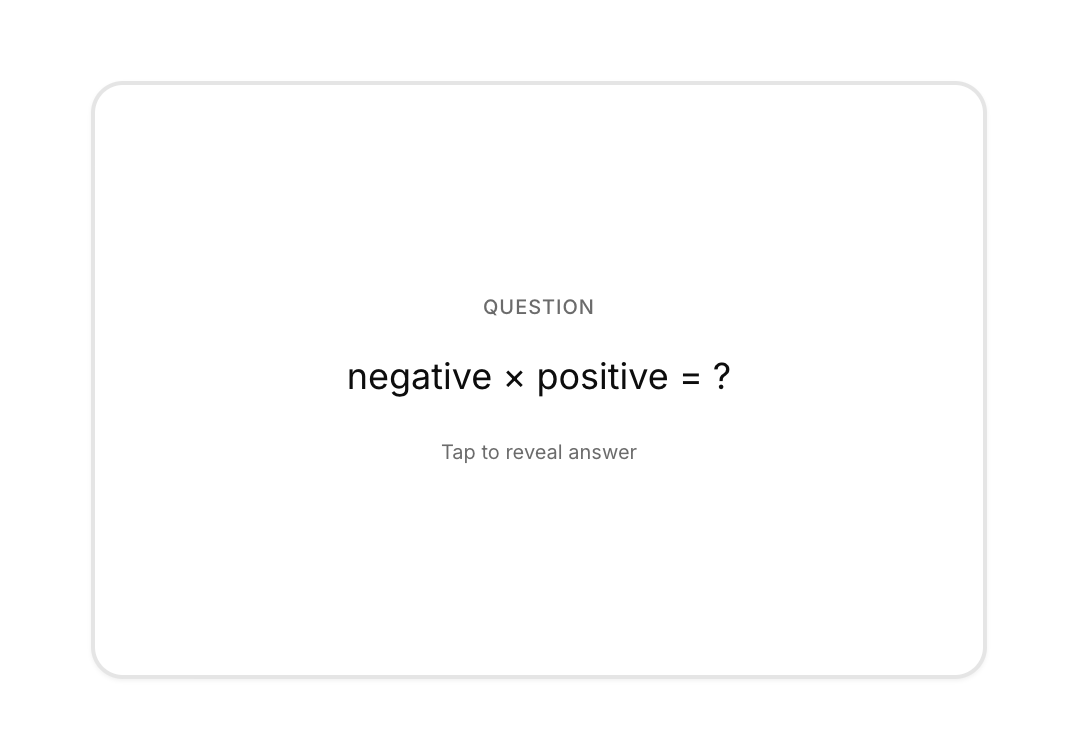
Orchen never does the work for students, it asks questions until they get there, and it learns how each one learns. Flashcards, quizzes, and a Learning Profile grow from their own work, not a generic curriculum.
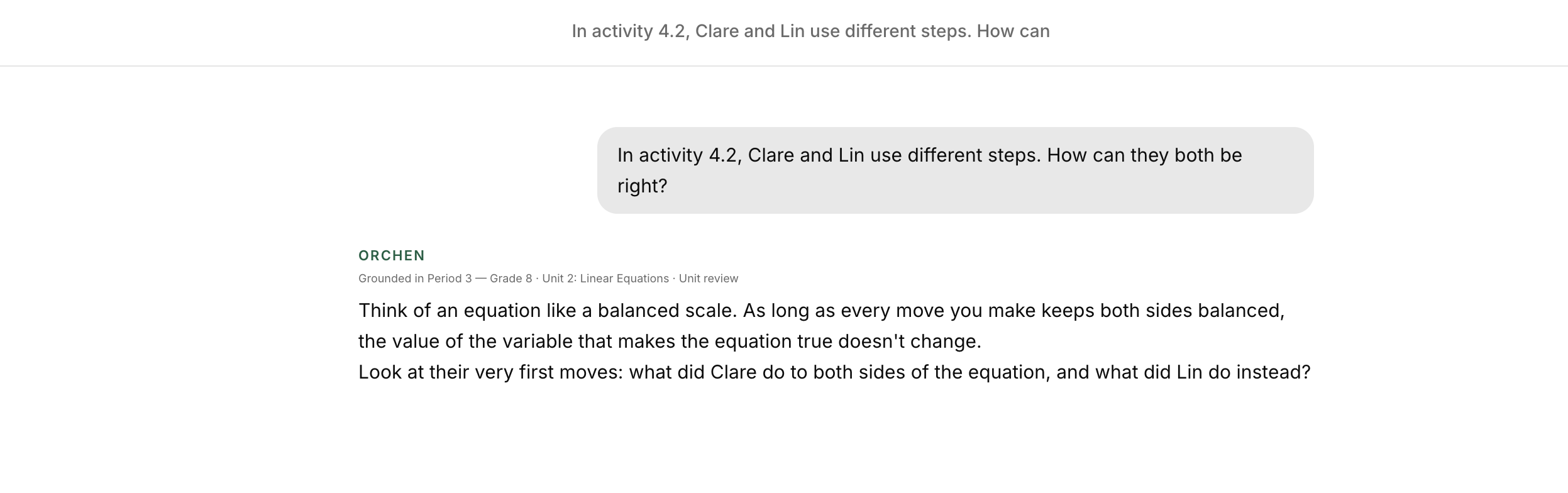
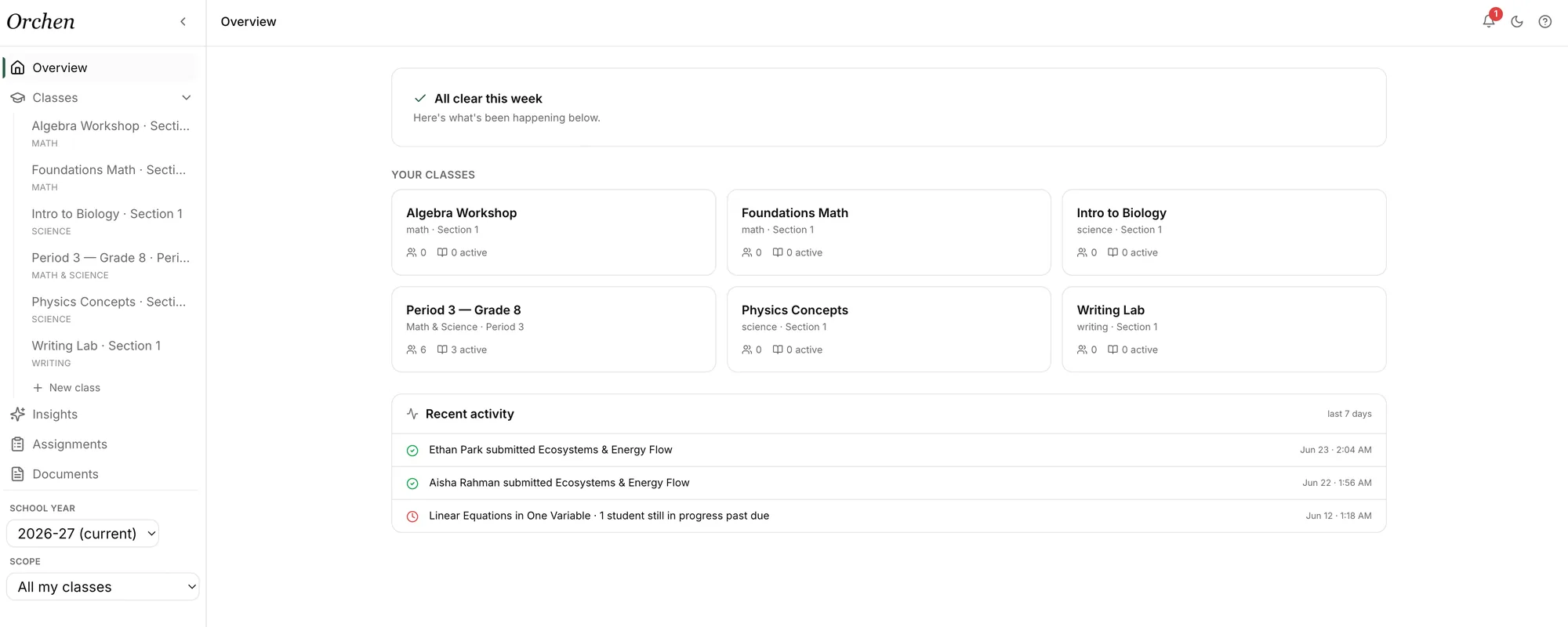
See how each student thinks before class, not after the test, who’s on track, who’s quietly stuck, and who needs you today.
What your child worked on, where they pushed through, and what to ask at dinner, every week, in plain language. Zero scores, zero jargon.
Your value to families, visible every week of the semester. You decide how the AI behaves, and everything rolls up into a school-wide picture you can stand behind.
Orchen runs as a software application on your school's existing devices, iPads, MacBooks, or any managed fleet. For schools that want network-level enforcement on managed devices, a pre-configured device layer is available as an optional add-on. No IT setup required either way.
The Orchen demo is open, no signup, no sales call. Ask it something a student would ask, and watch it teach instead of answer.
“When kids replace effortful learning with generative AI to shortcut assignments, it is quantifiably bad for their cognitive development. Students must make mistakes to become independent thinkers.”National School Boards Association · January 2026
I built Orchen because the two answers schools were being offered, ban AI, or look away, both seemed designed to fail the students. The research made the stakes clear; what was missing was an environment a school could actually take responsibility for: one that teaches instead of completing work, and treats student data like it belongs to the student.
Orchen is early-stage, and I'd rather say that plainly than dress it up. What early means in practice: schools that join now work directly with me, on configuration, on the pilot, on the roadmap. Every privacy commitment on this site is one I can show you in the architecture, live, with your technical reviewer in the room.
If you're weighing this decision for your school, write to me. You'll get a straight answer, including honest guidance on timing, if a later cohort would serve your school better.
No. This isn’t monitoring, it’s the understanding a great teacher builds one-on-one, made continuous, and shared only as the school decides. Adults see insight scoped to their role: teachers see how their class thinks, parents get a plain-language weekly digest. Each night the pipeline distills sessions into the Learning Profile, then the raw source is erased within seven days. Students keep a private journal nobody can read, and can see exactly what their parents can see. The transparency runs in every direction.
Orchen is built around both statutes: row-level security at the database layer, immutable audit logs of every staff access, per-school retention policies, and under-13 protections via the role gate. Your technical reviewer can verify every claim against the live architecture during the walkthrough, the platform page covers the details.
No new hardware and no IT project. Orchen runs in the browser on whatever fleet you already manage, iPads, Chromebooks, MacBooks. Configuration is an afternoon, not a semester. Schools that want network-level enforcement can add the optional managed device layer later.
Teachers read Orchen like a morning briefing, the platform does the managing. The class view shows who’s on track, who’s quietly stuck, who needs attention today. Creating assignments through Orchen is optional; the insight flows either way.
The Socratic design lowers the stakes of any single answer: Orchen asks students to reason and check, rather than handing down statements to accept. Subject-specific modules constrain how it teaches each discipline, and because teachers see concept-level trends across the class, a misunderstanding surfaces as a pattern, not a secret.
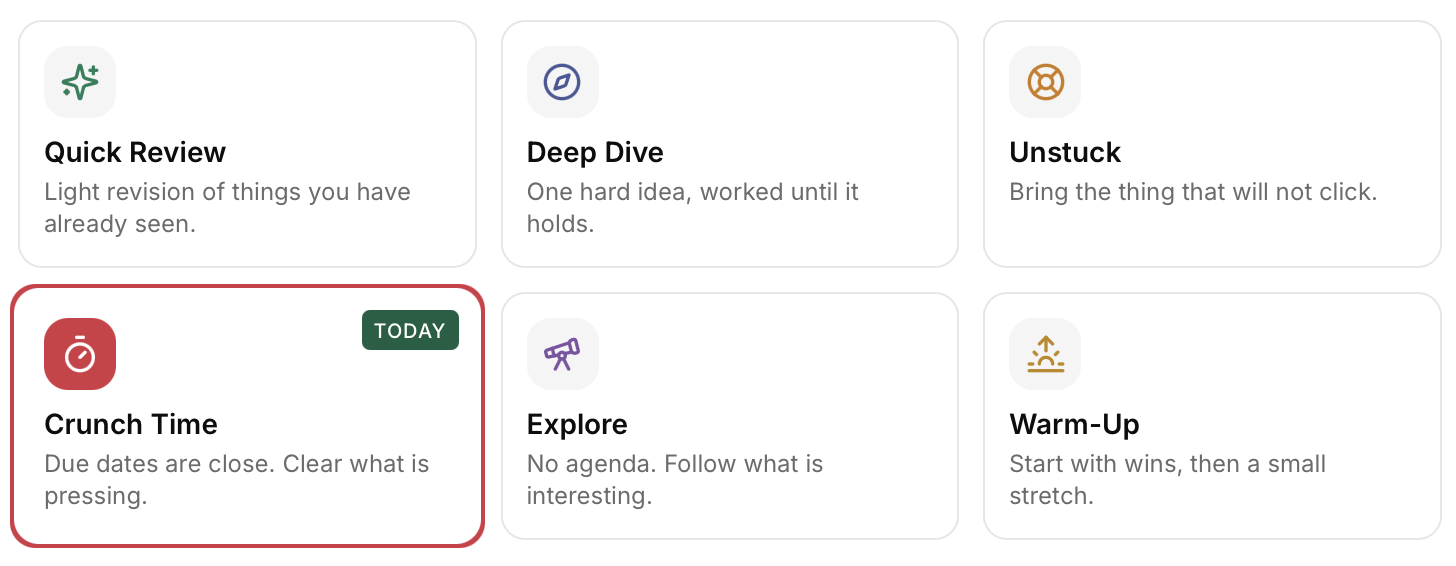
That’s the design problem Orchen is built around. The tutor meets each student where they are, adapting to how they learn, down to the study mood they pick that day, and the flashcards, quizzes, and learning profile are generated from their own work, which makes progress visible and personal. Assignments launch inside Orchen, so it’s where schoolwork already lives. Guided help that works beats an answer they have to hide.
A flat per-school site license, sized by headcount, a school-level decision, not a per-seat negotiation. Pilots are free: one class, about six weeks, working directly with the founder, then you review the results together and decide. The founding program spells out terms, timeline, and the clean exit, and emil@orchen.ai answers with straight numbers, not a quote funnel.
Leave your details and we'll reach out to book your walkthrough.
Or write to us at emil@orchen.ai
Every student, understood.